
Matias Merino (31)
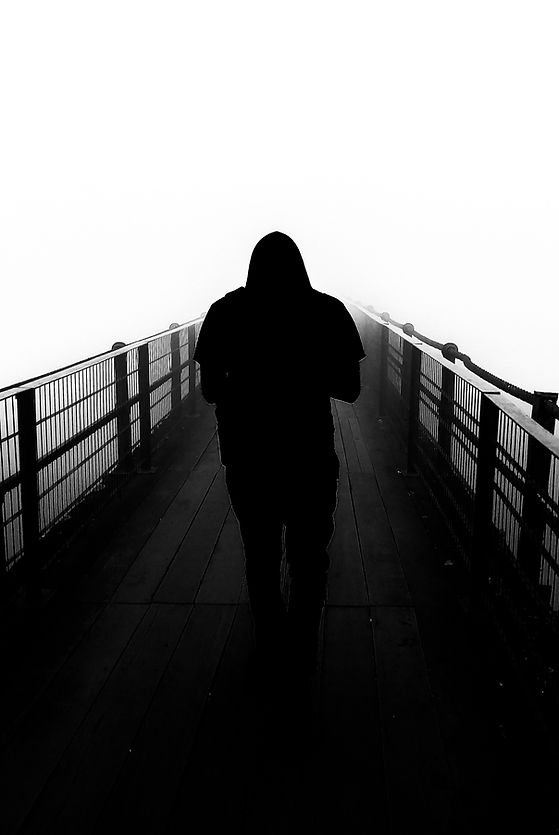
Merino Frames nasce de uma escuta silenciosa do mundo. Através da fotografia em preto e branco, Matias Merino revela aquilo que costuma passar despercebido: vestígios, rastros e fragmentos do cotidiano que habitam a ausência e a pausa. O projeto não busca o visível imediato, mas o que está na borda da percepção ou o que quase escapa.
Cada imagem é um recorte sensível do tempo, um esforço de tornar visível aquilo que não se revela facilmente. As fotografias emergem de instantes de suspensão, quando o olhar se volta para dentro.
O preto e branco aqui não é escolha estética, mas simbólica: o branco é expansão, o preto é contenção. Algumas imagens se apagam na luz e outras, se perdem na densidade. É onde a obra se sustenta.
A estrutura do trabalho é narrativa. Parte de um olhar infantil e contemplativo, atravessa confrontos e escolhas, até chegar ao esvaziamento. A travessia não é sobre chegar, mas sobre transformar-se.
Cada ato corresponde a uma camada:
O primeiro habita o território da consciência e seus limites, onde o olhar ainda tenta nomear o mundo, mas encontra o peso, a ausência e a contenção.
O segundo atravessa o subconsciente, onde símbolos, memórias e afetos começam a emergir, não de forma racional, mas como sinais de uma transformação interna em curso.
O terceiro mergulha no inconsciente, onde a lógica cede lugar ao sonho, à inversão, ao que é flutuante e indizível. Aqui, a imagem já não descreve: ela sugere, dissolve e desloca.
Por isso, cada obra é nomeada com uma data específica, como “5 de março” ou “8 de novembro”. Essas datas não apenas indicam quando a imagem foi feita, mas funcionam como marcas subjetivas de tempo: são pequenas âncoras que ampliam o campo de projeção do espectador. Ao invés de títulos descritivos, as datas convidam quem vê a acessar sua própria memória, como quem abre um diário esquecido.
Essa jornada também é pessoal. A fotografia, para o artista, é forma de reconstrução e existência. Cada imagem convida o outro a se ver, não como espectador, mas como quem reconhece, ali, algo que já sentiu sem saber nomear.
Merino Frames is born from a silent listening to the world.
Through black-and-white photography, Matias Merino unveils what usually goes unnoticed: traces, remnants, and fragments of everyday life that inhabit absence and pause.
This project does not seek the immediately visible, but rather what lies on the edge of perception—what almost slips away.
Each image is a sensitive cut through time, an effort to make visible what does not reveal itself easily. These photographs emerge from suspended moments, when the gaze turns inward.
Here, black and white is not an aesthetic decision but a symbolic one: white signifies expansion; black, containment. Some images vanish in light; others dissolve into density. That’s where the work finds its tension—and its balance.
The structure of the project is narrative.
It begins with a childlike, contemplative gaze; then moves through inner confrontations and existential choices, arriving finally at a state of emptiness.
This journey is not about arriving somewhere—but about becoming something else.
Each act corresponds to a layer:
The first dwells in the terrain of consciousness and its limits, where the eye still tries to name the world, yet is met with weight, absence, and restraint.
The second traverses the subconscious, where symbols, memories, and affections begin to surface—not rationally, but as signs of an internal shift in motion.
The third dives into the unconscious, where logic gives way to dream, inversion, and the unspeakable.
At this point, the image no longer describes—it suggests, dissolves, and displaces.
This is why each work bears a specific date, such as “March 5” or “November 8.”
These dates do more than mark when the photograph was made—they serve as subjective time-stamps, small anchors that broaden the viewer’s field of projection.
Rather than descriptive titles, they invite the viewer to access their own memory—as if opening a forgotten diary.
Ultimately, this journey is also personal.
For the artist, photography is a means of reconstruction and existence.
Each image invites the viewer not to observe from a distance, but to recognize something within—something once felt but never named.
